
How to prevent tooth decay in children
The good news? “Tooth decay is almost 100 percent preventable,” according to Dr. Delarosa. The key is to start a healthy dental routine as early as possible:
Don’t wait to visit the dentist.
Most kids (and adults) need a dental checkup and cleaning every six months, and they should start early: The AAPD, American Academy of Pediatrics (AAP) and American Dental Association (ADA) all recommend taking your child to the dentist by his first birthday. “This is the number-one way to prevent tooth decay,” attests Dr. Delarosa. “I’ve seen decay in kids as young as 20, 18, even 15 months old, but never at 12 months or younger. That early prevention is crucial.” The first visit establishes your child’s dental “home,” builds an ongoing relationship between the dentist and your family, and gives the dentist an opportunity to guide parents on healthy dental habits and cavity prevention. Regular checkups also keep early decay from turning into deep, painful cavities that require complicated procedures to treat, says Dr. Seirawan: “The difficulty associated with finding a dentist or accessing an emergency room for a distressed child—in pain with no regular dentist—is momentous.”
Avoid sharing spoons.
Even before teeth emerge, cavity-causing bacteria called Streptococcus mutans can colonize the furrows of a baby’s tongue—and saliva-sharing behaviors, like cleaning a pacifier with your mouth or using the same utensils, can spread the bacteria from your mouth to your child’s. “That’s why it’s important for parents to take care of their own teeth, to minimize the transmission of harmful bacteria,” says Dr. Delarosa. Gently wiping your child’s gums with gauze or a soft washcloth after feedings can help remove bacteria, plus get him accustomed to having your finger—and later a toothbrush—in his mouth.
Use the right toothpaste.
There’s no need to buy non-fluoridated “training toothpaste” for your little one: ADA guidelines now recommend that parents use fluoride toothpaste as soon as a baby gets his first tooth. Fluoride toothpaste can help remineralize areas of teeth that have been made weaker and susceptible to decay by bacterial acids. This new guideline means you don’t have to worry if your town’s water supply isn’t fluoridated, says Dr. Delarosa (but check with your dentist to be sure). He recommends giving kids ages 3 and under a smear of toothpaste the size of a grain of rice, then graduating to a pea-sized dollop for kids ages 4 to 6. And don’t think twice about buying bubblegum-flavored or glittery toothpaste: “Children’s toothpaste has the same amount of fluoride—about 900 parts per million—as the adult kind, but the fun flavors and colors mean kids will be more likely to stick with a brushing routine.”
Give plaque the brush-off.
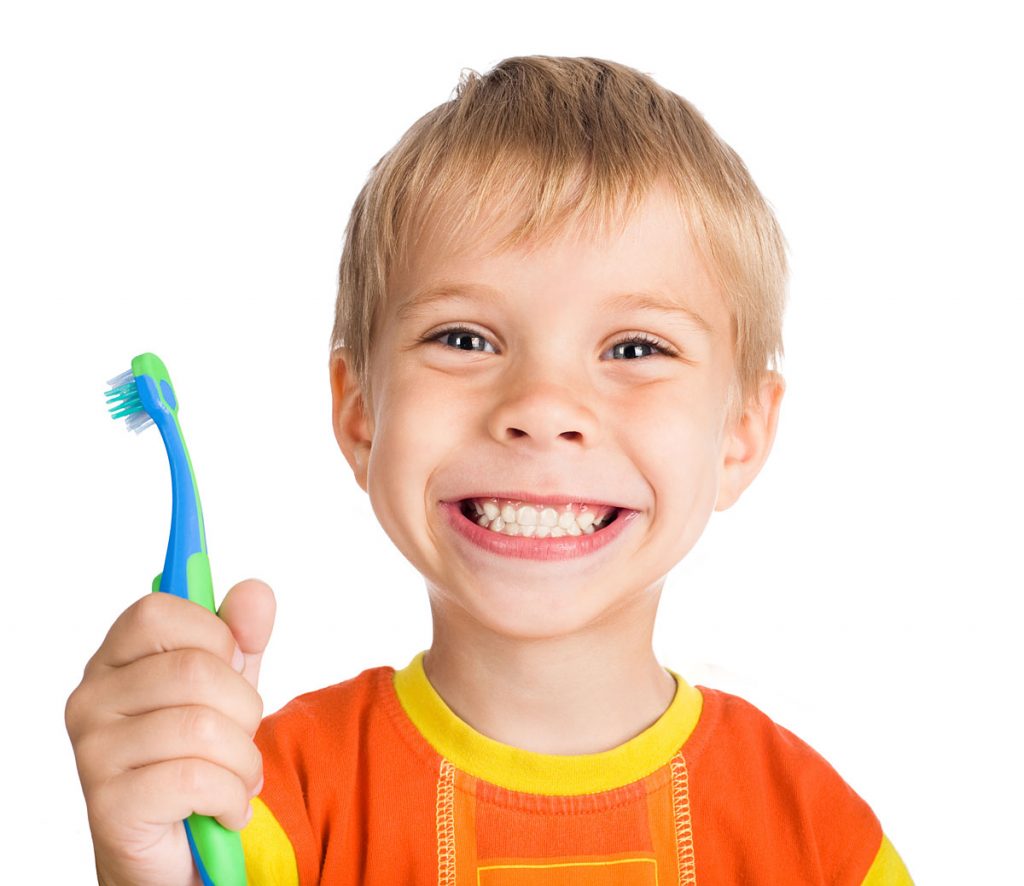
Once your child gets his first tooth, brush gently with a soft-bristled toothbrush twice daily for 2 minutes or as needed, with the goal of removing plaque (a sticky film containing millions of bacteria) from each tooth. “Parents should be in charge of brushing—meaning doing the actual brushing—until at least age 6,” says Dr. Segura. “After that, kids can be allowed to brush themselves, but parents should still check the teeth for plaque afterward.” Flossing is also necessary to reach the spaces between teeth and should be done as soon as your child has two teeth touching each other.
Snack smart.
Bacteria feed on sugar and produce acid waste, which erodes the tooth to create a cavity—so one of the best ways to keep your child’s teeth healthy is to limit his intake of sugary foods and drinks. “Diet is a big factor in preventing decay,” says Dr. Segura. “Soda, Gatorade, sticky candy, and other sweets increase risk—even gummy vitamins are usually full of sugar.” The frequency of snacking matters, too: Grazing all day creates a constant supply of sugar and acid in the mouth, so Dr. Segura recommends limiting sugary snacks and drinks to mealtimes and brushing soon after eating. Crunchy fresh fruits and veggies like apples, carrots, and celery are better options because they help scrub plaque from teeth as you eat.
0 comments
No comments. Leave first!